Performance and risk, from what happened to what if.
Halō builds secure, real-time digital twins of complex operations and critical national infrastructure. Look back at what happened and why, see what's happening now, predict what comes next, and test what-if scenarios before you act. Every number traces to its source.
One engine. Every flow.
Trusted by industry leaders


From annual snapshots to a living picture.
Today, complex operations are understood in hindsight: a monthly report, an annual review, a risk declaration filed once a year. We're building the alternative: a living picture of every operation that shows what happened and why, what's happening now, what comes next, and what happens if you act. With that picture, disruptions are absorbed before they cascade, and every decision can show its working.
The picture arrives too late.
Held apart.
Tracking, schedules, rosters, maintenance and forecasts each live in their own system.
Seen in hindsight.
Performance is assembled into a report after the disruption has already cascaded.
Hard to defend.
A figure that can't be traced to its records gets argued over instead of acted on.
Not just the asset, but a model of how the operation runs.
Most digital twins render an asset. A Halō twin models the operation: assets, people, places and conditions, connected and live, with performance and risk measured together across four horizons.
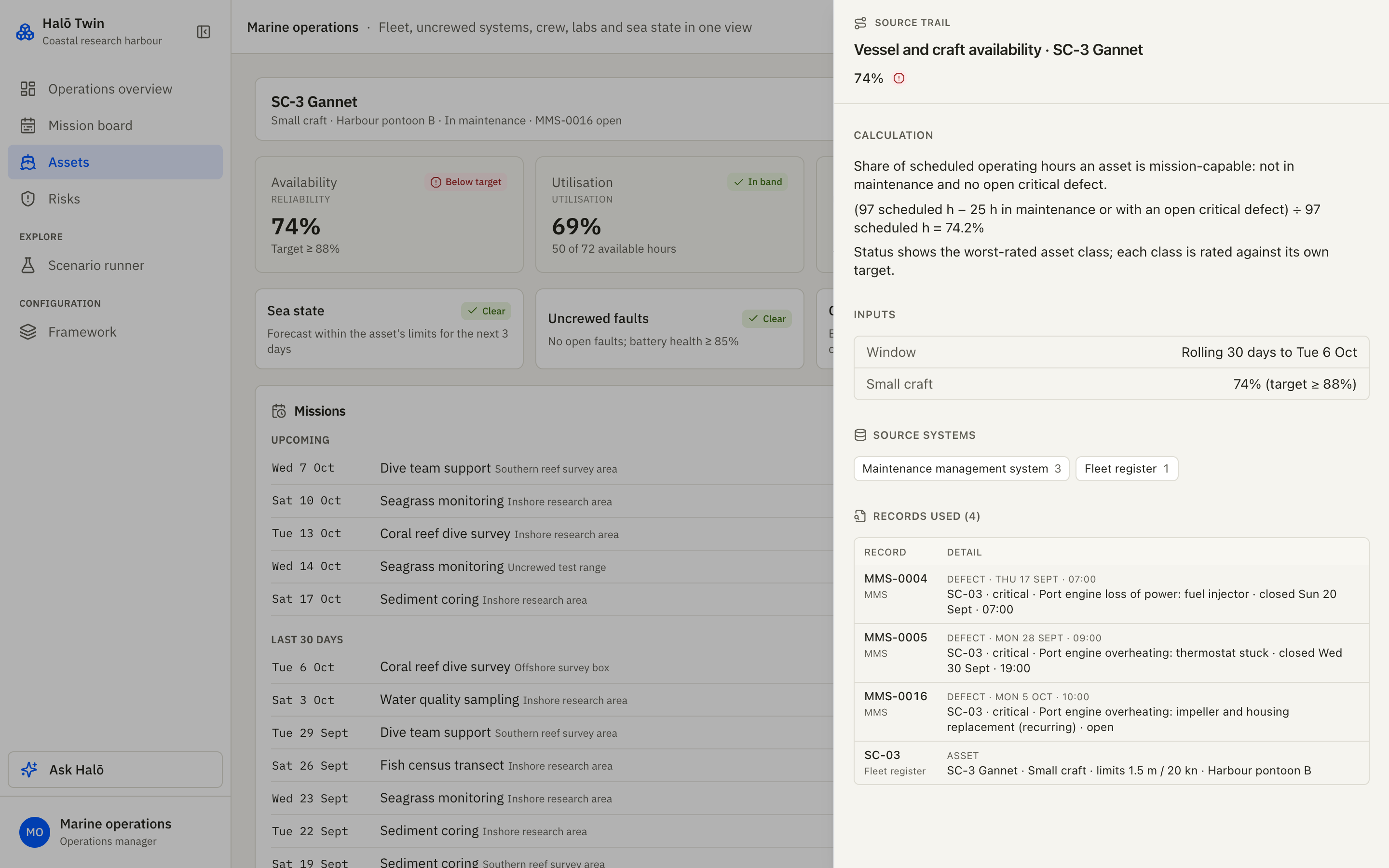
TraceEvery figure opens to its records; every forecast to its drivers.
AskAny question, in plain language. Not just predefined views: ask “Which dive sites are safe tomorrow, and why?” and the twin answers from its records, sources attached.
Wherever assets, people and places move together.
Ports & harbours
Vessels, berths, freight and passengers on shared quays.
PerformanceRisk
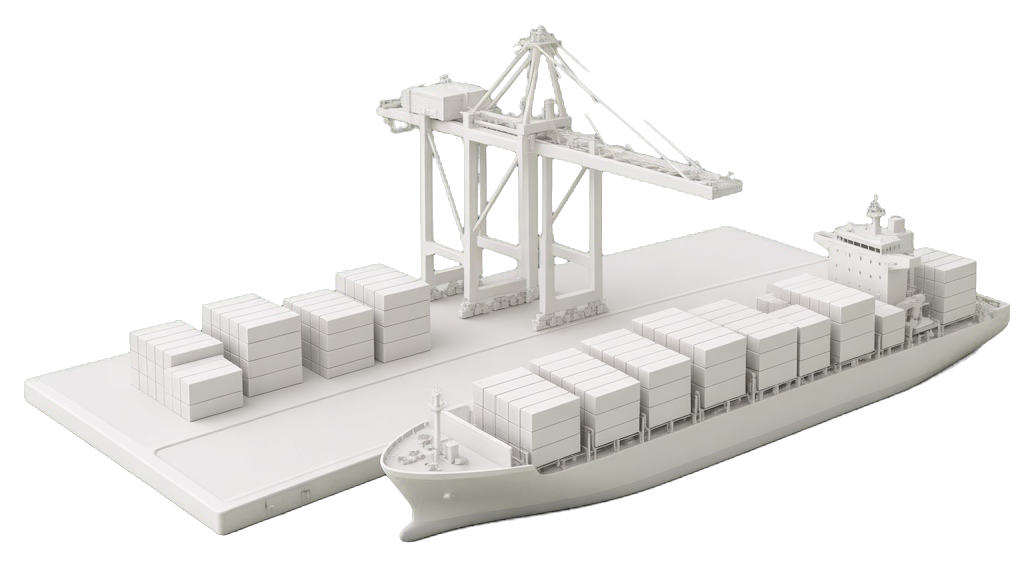
- Risk: EnvironmentalWind holds on the cranes
- Performance: ThroughputFreight units across the quay
- Risk: GeopoliticalRoutes closed or rerouted
- Performance: TimeTurnaround and dwell
- Assets
- Vessels, cranes, berths
- People
- Crews, dockers, passengers
- Places
- Quays, terminals, gate roads
Secure by design. Built to be trusted with your operation.
Yours.
Your data, configuration and findings remain yours.
Shared only with consent.
Nothing reaches an insurer or any third party without your consent.
Where you choose.
Hosted in-region or inside your own environment.
Traced.
Every figure carries its source system and record ID.
Staged.
Every engagement starts small, with a gate you control.
The layer underneath the decision, not the decision-maker.
We don't replace the people who run the operation. We give them one connected, source-linked picture, so the judgment they're paid for rests on everything that's known.